
The Role of Mitochondria and Oxidative Stress in Parkinson's
Much of today’s Parkinson’s research points to mitochondrial dysfunction and oxidative stress as central drivers of the disease.
Parkinson’s is often described as a neurodegenerative disorder that primarily affects movement. However, Resolve Parkinson’s views it more broadly—as a complex, multisystem condition that begins long before motor symptoms appear.
At the cellular level, this means something fundamental is going wrong across the body. Mitochondria—the structures responsible for producing energy in our cells—no longer function as they should. When mitochondria fail, cells lose the ability to maintain balance, repair damage, and produce the energy required for normal function.
This disruption may play a critical role in the progression of Parkinson’s, particularly in the loss of dopamine-producing neurons.
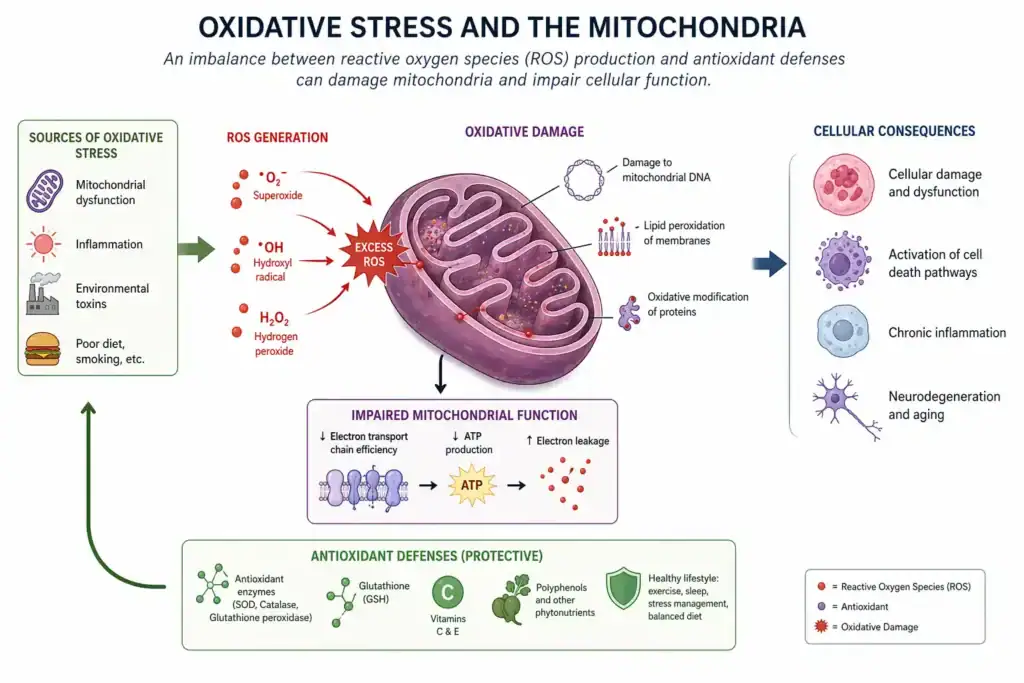
“Much Parkinson’s research supports the idea that mitochondrial failure is the root cause of Parkinson’s.”
How Mitochondria Work Inside Healthy Cells
Inside your cells, tiny “power plants” called mitochondria make energy to keep you alive and moving. But just like a car engine produces exhaust, mitochondria produce waste molecules called free radicals (also known as reactive oxygen species).
Free radicals are highly unstable—they bounce around and damage nearby proteins, fats, and DNA. Normally, your body uses antioxidants to neutralize these free radicals and keep things in balance.
Oxidative stress happens when there are too many free radicals and not enough antioxidants to clean them up.
In the body, oxidative stress wears down cells the way rust wears down metal. Just as rust gradually weakens metal, too much reactive oxygen can gradually weaken cells if the body’s repair systems become overwhelmed.
What Happens When Mitochondria Malfunction
When mitochondria stop functioning properly, several damaging processes begin to take hold:
- Oxidative stress increases
An imbalance develops between free radicals and antioxidants, leading to damage of cells and tissues. - Chronic inflammation persists
The body’s natural defense system becomes overactive and fails to turn off, damaging healthy cells. In Parkinson’s, this ongoing inflammation contributes to the loss of dopamine-producing neurons. - Cellular energy declines (ATP production)
Neurons require significant energy to function. When energy production drops, cells struggle to maintain normal processes. - Neurodegeneration begins
Dopamine-producing neurons in the substantia nigra are particularly vulnerable and are often the first to be affected. Over time, damage can spread to other parts of the brain.
Supporting Mitochondrial Health Through Lifestyle
Improving mitochondrial function isn’t currently something that can be achieved with a single medication. However, lifestyle plays an important role in supporting cellular health:
- Movement and exercise
Physical activity stimulates the production of new mitochondria and helps maintain overall cellular function. - Sleep and recovery
Mitochondria not only produce energy—they also help regulate signals that tell the body when to rest and repair. Quality sleep is essential for maintaining this balance. - Nutrition and antioxidants
A diet rich in antioxidant-containing foods (such as berries and other whole foods) helps neutralize excess free radicals and reduce oxidative stress.
Cellular Defense and Repair: The Role of Nrf2
The body has built-in systems designed to protect and repair cells under stress. One of the most important is a protein called Nrf2.
Nrf2 acts like a cellular alarm and repair coordinator. When cells experience oxidative stress, inflammation, or toxin exposure, Nrf2 activates and moves into the nucleus, where it turns on protective genes.
When Nrf2 is activated, cells begin to:
- Produce antioxidants that neutralize harmful free radicals
- Reduce inflammation and calm overactive immune responses
- Support detoxification by clearing out cellular waste
- Protect mitochondria and help maintain their function
These protective processes can last for days, helping the body recover from ongoing stress.
You can explore a deeper scientific explanation of this process in this research article.
Alternative Energy Pathways: Ketones and Cellular Energy
Under normal conditions, the body relies on glucose as its primary source of fuel—it’s the body’s most immediately available energy source. However, when glucose is limited, the body can switch to an alternative fuel: ketones.
When mitochondria use ketones instead of glucose, they tend to produce fewer reactive byproducts. That means less internal ‘wear and tear’ and a more peaceful environment for cells that are already working hard. This creates a more stable and less damaging cellular environment.
A ketogenic diet can help support this metabolic flexibility. The goal is not to eliminate glucose entirely, but to help the body efficiently switch between energy sources, reducing strain on mitochondria and minimizing oxidative stress.
Sulforaphane and Mitochondrial Protection
The encouraging news is that researchers are uncovering new ways to support mitochondrial health.
One area of active study is sulforaphane—a natural compound found in broccoli and other cruciferous vegetables. Sulforaphane may help activate the body’s natural defense systems, including Nrf2, and protect mitochondria from further damage.
Explore Further
Read Resolve Parkinson's Origin Story
Learn how Dr. Wright’s work inspired the founding of Resolve Parkinson’s.
Lifestyle Education for People with Parkinson's
Learn about practical strategies for improving mitochondrial health and daily well-being.
Resources for Care Partners of People with Parkinson's
Find tools, guidance, and support for those caring for People with Parkinson’s.
Voices of Parkinson's Video Series
Hear directly from patients, researchers, and care partners shaping the future of care.