
Broccoli Seed Tea Therapy for Parkinson’s Disease: Dr. Albert Wright’s Approach
Broccoli Seed Tea Therapy for Parkinson’s Disease: Dr. Albert Wright’s Approach
Broccoli Seed Tea (BST) therapy is a patient-developed approach created by Dr. Albert Wright to deliver bioavailable sulforaphane—a natural compound that may support the body’s ability to manage oxidative stress and inflammation.
Developed through personal research and experimentation following his diagnosis, BST therapy reflects Dr. Wright’s belief that supporting cellular health may play a critical role in improving quality of life for people living with Parkinson’s.
What Is Broccoli Seed Tea Therapy?
Broccoli Seed Tea is a method of extracting and activating compounds from broccoli seeds to produce bioavailable sulforaphane.
Sulforaphane is a naturally occurring compound found in cruciferous vegetables. When properly activated, it may help stimulate the body’s internal defense systems, including antioxidant production and cellular repair.
BST therapy is designed to:
- Deliver sulforaphane in a consistent and bioavailable form
- Support the body’s natural response to oxidative stress
- Complement—not replace—existing Parkinson’s treatments

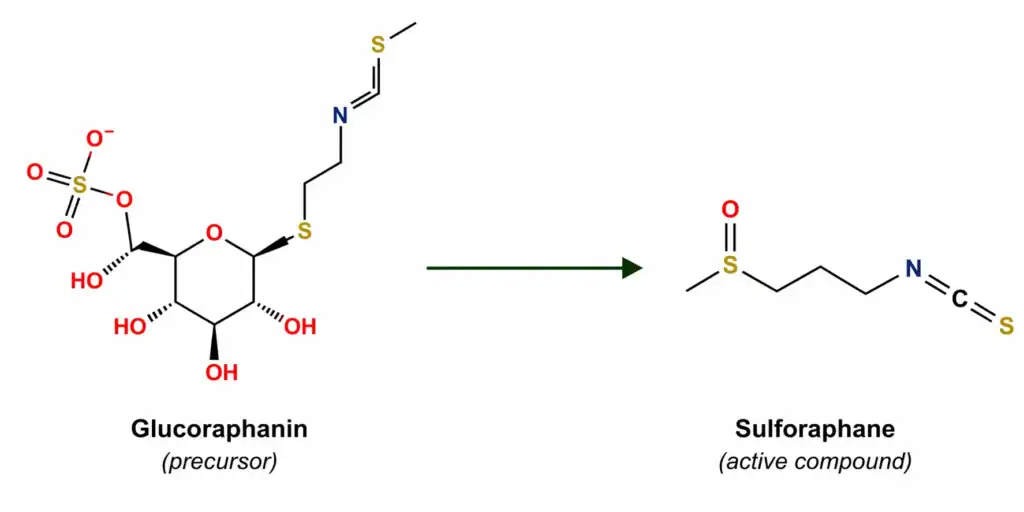
How It Works: From Broccoli Seeds to Cellular Defense
Broccoli seeds contain a precursor compound called glucoraphanin. When combined with the enzyme myrosinase under the right conditions, this compound is converted into active sulforaphane.
Once absorbed by the body, sulforaphane activates the Nrf2 pathway, which helps regulate cellular defense and repair systems.
Through this process, BST therapy may help:
- Increase antioxidant production
- Reduce chronic inflammation
- Support detoxification pathways
- Protect mitochondrial function
This mechanism is why sulforaphane is often described as a “master switch” for cellular defense.
Why Dr. Wright Developed This Approach
As a chemist and physicist, Dr. Albert Wright approached his 2018 Parkinson’s diagnosis as a scientific problem, applying his expertise to investigate the biological mechanisms underlying Parkinson’s disease.
His research led him to focus on three interconnected processes believed to play a central role in Parkinson’s progression:
- Oxidative stress
- Mitochondrial dysfunction
- Chronic inflammation
Recognizing that sulforaphane could activate the body’s natural defense systems, Dr. Wright began experimenting with ways to deliver it in a form that was both concentrated and bioavailable.
Through his work, he identified glucoraphanin — a precursor compound found in broccoli seeds — as a promising starting point. He then developed a proprietary method for preparing a highly concentrated broccoli seed tea designed to reliably convert glucoraphanin into active sulforaphane.
This approach was intended to address a key challenge: ensuring that sulforaphane is produced in a form the body can effectively absorb and use.
Dr. Wright initially tested this method on himself (N=1 research), observing stabilization in his non-motor symptoms. He then expanded his work to a small group of individuals with Parkinson’s who were interested in participating.
Early observations suggested improvements in non-motor symptoms, including:
- Fatigue
- Digestive function
- Urinary symptoms
- Sleep quality
These are areas that often have a significant impact on quality of life but are not always well addressed by conventional Parkinson’s treatments.

What We Know—and What We Don’t Yet Know
What We Know
- Sulforaphane has been shown in research to support antioxidant activity and reduce inflammation
- Laboratory and early human studies suggest potential neurological benefits
- Patient-led research has reported improvements in non-motor symptoms
What We Don’t Yet Know
- Optimal dosing and delivery methods
- Long-term effects
- How it compares to or interacts with standard treatments
Large-scale clinical trials are still needed to fully validate this approach.
How This Approach Fits Within Parkinson’s Treatment
Broccoli Seed Tea therapy is not intended to replace conventional Parkinson’s treatments. Instead, it offers a complementary perspective that focuses on supporting cellular health and addressing underlying biological stress.
Traditional treatments and Dr. Wright’s approach operate in fundamentally different ways:
| Feature | Dr. Wright’s Approach | Conventional Treatments |
|---|---|---|
| Core Strategy | Supporting cellular defense through antioxidant pathways | Managing symptoms through dopamine replacement |
| Primary Compound | Bioavailable sulforaphane from broccoli seeds | Medications such as Levodopa (L-dopa), often combined with carbidopa |
| Primary Focus | Non-motor symptoms and overall cellular health | Motor symptoms such as tremor, rigidity, and movement |
| Mechanism of Action | Activates the Nrf2 pathway to support antioxidant and repair systems | Increases dopamine levels in the brain |
| Side Effects | Generally well tolerated in early observations; research is ongoing | Can include nausea, dyskinesia, and fluctuations in symptom control |
| Accessibility | Non-pharmaceutical, patient-led approach | Prescription-based medical treatment |
| Innovation Model | Patient-led, systems-based perspective | Clinician-led, pharmacological model |
Dr. Wright’s approach is best understood as complementary rather than competitive. While conventional therapies focus on managing motor symptoms, BST therapy aims to support underlying cellular processes such as oxidative stress and inflammation—areas that are often less directly addressed in standard care.
How to Access Broccoli Seed Tea Therapy
Because of its experimental nature, BST therapy is not available as a standardized medical treatment.
Individuals interested in learning more can connect with the Broccoli Seed Tea Club, an international community that supports education, responsible use, and shared learning among participants.
The club provides:
- Guidance on preparation methods
- Access to resources and community support
- A structured approach to participation
For more information, contact: [email protected]
Important Considerations
Broccoli Seed Tea therapy is a non-pharmaceutical, patient-led approach. It should be considered thoughtfully and as part of a broader care plan.
- It is not a cure for Parkinson’s disease
- It is not a replacement for prescribed treatments
- Individual responses may vary
If you are considering BST therapy, it is recommended to consult with a healthcare provider, particularly if you are taking medications or managing other health conditions.
Want to better understand how sulforaphane supports cellular health in Parkinson’s?
Frequently Asked Questions About Broccoli Seed Tea Therapy
Broccoli Seed Tea (BST) therapy is a patient-developed approach created by Dr. Albert Wright to deliver bioavailable sulforaphane, a natural compound found in broccoli seeds. The goal is to support the body’s cellular defense systems, including those involved in antioxidant activity, inflammation response, and mitochondrial protection.
No. Broccoli Seed Tea therapy is not a cure for Parkinson’s disease. It is a non-pharmaceutical, patient-led approach that may help support cellular health and improve certain non-motor symptoms, but it should not be presented as a cure or a replacement for prescribed medical treatment.
Conventional Parkinson’s treatments are primarily designed to manage motor symptoms by increasing or modulating dopamine in the brain. Broccoli Seed Tea therapy takes a different, complementary approach by focusing on cellular stress, oxidative stress, inflammation, and mitochondrial support. It is intended to complement, not replace, standard medical care.
Dr. Wright’s approach focused primarily on non-motor symptoms, which may include fatigue, digestive issues, urinary symptoms, and sleep disruption. These symptoms can have a major impact on quality of life and are often not as well addressed by conventional Parkinson’s medications.
Broccoli seeds contain glucoraphanin, a precursor compound that can be converted into active sulforaphane under the right conditions. Once absorbed, sulforaphane may activate the Nrf2 pathway, which helps regulate antioxidant production, inflammation response, detoxification, and mitochondrial protection.
Not yet. Sulforaphane has shown promise in laboratory research, early human studies, and patient-led experimentation, but large-scale clinical trials are still needed to determine optimal dosing, long-term safety, and effectiveness for Parkinson’s disease.
No. Broccoli Seed Tea therapy should not replace prescribed Parkinson’s medications or other treatments recommended by a healthcare provider. It should be considered thoughtfully and as part of a broader care plan.
The information on this website is provided for general informational and educational purposes only and reflects the personal experiences and opinions of individuals living with Parkinson’s disease. It is not intended and should not be used as a substitute for professional medical advice, diagnosis, or treatment.
None of the authors, contributors, or operators of this website are medical professionals, and they do not provide medical advice, make medical recommendations, or offer individualized guidance for any person or situation. Nothing on this website creates a doctor–patient or other healthcare professional–patient relationship.
This website does not recommend, endorse, or make any representations or warranties about the accuracy, completeness, efficacy, safety, or suitability of any specific tests, techniques, procedures, treatments, supplements, products, services, opinions, or other information mentioned here. Discussions of herbal or other supplements are for informational purposes only and are not intended to diagnose, treat, cure, or prevent any disease. In many cases, such products and uses have not been evaluated or approved by any regulatory authority.
You are solely responsible for how you use the information found on this website. The website operator and contributors are not responsible or liable for any interpretation, use, or misuse of the information provided here, or for any loss, injury, or damage allegedly arising from your reliance on it.
Medical knowledge and regulatory guidance change over time, and information on this website may not be current or independently verified. You should always confirm any information obtained from this website with other reliable sources and, most importantly, with your physician or other qualified health-care provider. Never disregard, avoid, or delay seeking professional medical advice from your physician or other qualified health-care provider because of something you have read on, or accessed through, this website. If you think you may be experiencing a medical emergency or a serious worsening of symptoms, call your doctor or your local emergency number immediately.
Explore Further
Read Resolve Parkinson's Origin Story
Learn how Dr. Wright’s work inspired the founding of Resolve Parkinson’s.
Lifestyle Education for People with Parkinson's
Learn about practical strategies for improving mitochondrial health and daily well-being.
Resources for Care Partners of People with Parkinson's
Find tools, guidance, and support for those caring for People with Parkinson’s.
Voices of Parkinson's Video Series
Hear directly from patients, researchers, and care partners shaping the future of care.